Lenovo Tab M8 (4th Gen) vs Oppo Pad 5 Pro
[ VERDICT ]
Winner: Oppo Pad 5 Pro (91/100)
Oppo Pad 5 Pro leads overall with a score of 91/100 compared to Lenovo Tab M8 (4th Gen) (37/100), offering superior measured performance and technical specifications.
Why choose Oppo Pad 5 Pro:
- + Higher Gaming score (95 vs 14)
- + Higher DeviceBenchmark Score score (91 vs 37)
- + Higher Performance score (96 vs 15)
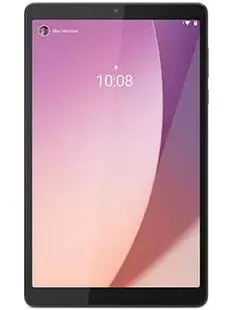

Benchmark Performance Comparison
Normalized Lab Scores| Benchmark | Lenovo Tab M8 (4th Gen) | Oppo Pad 5 Pro |
|---|---|---|
| DeviceBenchmark Score | 37.0 Poor | 91.0 Excellent WINNER |
| Gaming | 14.0 Poor | 95.0 Excellent WINNER |
| Performance | 15.0 Poor | 96.0 Excellent WINNER |
Detailed Technical Specifications
Battery
| Specification | Lenovo Tab M8 (4th Gen) | Oppo Pad 5 Pro |
|---|---|---|
| Battery type | Li-Po | Li-Po |
| Capacity | 5100 mAh | 13380 mAh |
| Fast charging | No | Yes |
| Full charging time | 4:00 hr | — |
| Gaming | 05:13 hr | — |
| Max charge power | 10 W | 67 W |
| Replaceable | No | No |
| Reverse charging | No | Yes |
| Standby | 147 hr | — |
| Watching video | 12:46 hr | — |
| Web browsing | 09:20 hr | — |
| Wireless charging | No | No |
| Bypass charging | — | No |
Benchmarks
| Specification | Lenovo Tab M8 (4th Gen) | Oppo Pad 5 Pro |
|---|---|---|
| CPU | 50011 | 1054518 |
| Data manipulation | 3196 | — |
| GPU | 11351 | 1368986 |
| Memory | 43708 | 428822 |
| Multi-core score | 1150 | 11451 |
| Photo editing | 8627 | — |
| Single-core score | 330 | 3679 |
| Total score | 155362 | 3740686 |
| UX | 50292 | 888360 |
| Video editing | 3987 | — |
| Web score | 5175 | — |
| Writing score | 4460 | — |
| Compute Score (GPU) | — | 27475 |
Connectivity
| Specification | Lenovo Tab M8 (4th Gen) | Oppo Pad 5 Pro |
|---|---|---|
| 2G network | GSM B2/B3/B5/B8 | — |
| 3G network | UMTS B1/B2/B5/B6/B8/B19 | — |
| 4G network | LTE B1/B2/B3/B4/B5/B7/B8/B19/B20/B26/B28(a+b)/B38/B40/B41 | — |
| 5G support | No | No |
| Bluetooth features | LE | LE |
| Bluetooth version | 5 | 6.0 |
| GPS | GPS, GLONASS, Beidou | — |
| Hybrid slot | No | No |
| Infrared port | No | No |
| LTE Cat* | 7 | — |
| NFC* | No | No |
| Number of SIM* | 1 | — |
| Type of SIM card | Nano | No |
| USB features | - Charging- USB-Storage mode | - Charging- USB-Storage mode- OTG |
| USB type | USB Type-C | USB Type-C |
| USB version | 2 | 3.2 |
| Wi-Fi features | - Dual Band- Wi-Fi Direct- Wi-Fi Hotspot- Wi-Fi Display | - Dual Band- Wi-Fi MiMO- Wi-Fi Direct- Wi-Fi Hotspot- Wi-Fi Display |
| Wi-Fi standard | Wi-Fi 5 (802.11 a/b/g/n/ac) | Wi-Fi 7 (802.11 a/b/g/n/ac/ax/be) |
| eSIM support* | No | No |
| DisplayPort | — | Yes |
Design and build
| Specification | Lenovo Tab M8 (4th Gen) | Oppo Pad 5 Pro |
|---|---|---|
| Area | 237 cm2(36.8 inches2) | 605 cm2(93.8 inches2) |
| Colors | Gray, Blue | Gold, Green, Purple |
| Fingerprint scanner | No | No |
| Frame material | Plastic | Metal |
| Height | 197.97 mm (7.79 inches) | 289.7 mm (11.41 inches) |
| Rear material | Plastic | Metal |
| Thickness | 8.95 mm (0.35 inches) | 5.9 mm (0.23 inches) |
| Waterproof | No | No |
| Weight | 320 g (11.29 oz) | 672 g (23.7 oz) |
| Width | 119.82 mm (4.72 inches) | 208.8 mm (8.22 inches) |
Display
| Specification | Lenovo Tab M8 (4th Gen) | Oppo Pad 5 Pro |
|---|---|---|
| Adaptive refresh rate | No | Yes |
| Aspect ratio | 16:10 | 7:5 |
| Contrast | 2563:1 | 999:1 |
| HDR support | No | — |
| Max rated brightness | 350 nits | 700 nits |
| PPI | 189 ppi | 315 ppi |
| PWM | Not detected | Not detected |
| RGB color space | 85.6% | 84.1% |
| Refresh rate | 60 Hz | 144 Hz |
| Resolution | 800 x 1280 pixels | 2120 x 3000 pixels |
| Response time | 35 ms | 20 ms |
| Screen protection | Tempered glass | Tempered glass |
| Screen-to-body ratio | 78.2% | 87.9% |
| Size | 8 inches | 13.2 inches |
| Type | IPS LCD | IPS LCD |
| Display features | — | - DCI-P3 |
Main camera
| Specification | Lenovo Tab M8 (4th Gen) | Oppo Pad 5 Pro |
|---|---|---|
| 1080p video recording | Up to 30FPS | Up to 60FPS |
| 4K video recording | No | Up to 30FPS |
| 8K video recording | No | No |
| Aperture | f/2.0 | — |
| Autofocus | Phase autofocus | Phase autofocus |
| Camera features | - | - |
| Flash | No | LED |
| Image resolution | 5 MP | 4160 x 3120 |
| Lenses | 1) Standard: 5 MP | 1) Standard: 13 MP |
| Matrix | 5 megapixels | 13 megapixels |
| Slow motion | No | — |
| Stabilization | Digital | Digital |
| Zoom | Digital | Digital |
Memory
| Specification | Lenovo Tab M8 (4th Gen) | Oppo Pad 5 Pro |
|---|---|---|
| Channels | 2 | 4 |
| Memory card | MicroSD | No |
| Memory card max size | Up to 1024 GB | — |
| Memory clock | 1600 MHz | 5300 MHz |
| Memory type | LPDDR4X | LPDDR5X |
| RAM size | 3 GB | 8 GB |
| Storage size | 32 GB | 256 GB |
| Storage type | eMMC 5.1 | UFS 4.1 |
Other
| Specification | Lenovo Tab M8 (4th Gen) | Oppo Pad 5 Pro |
|---|---|---|
| Announced | April 2023 | April 2026 |
| Bundled charger | Yes, 10 W | Yes, 67 W |
| Category | Budget | Flagship |
| Launch price (MSRP) | $119 | — |
| Release date | May 2023 | April 2026 |
| Sensors | - Proximity sensor- Accelerometer- Ambient light sensor | - Proximity sensor- Gyroscope- Ambient light sensor- Compass |
Performance
| Specification | Lenovo Tab M8 (4th Gen) | Oppo Pad 5 Pro |
|---|---|---|
| Architecture | - 4 cores at 2 GHz: Cortex-A53 | - 6 cores at 3.63 GHz: Oryon Gen 3 Performance- 2 cores at 4.61 GHz: Oryon Gen 3 Prime |
| CPU cores | 4 (4) | 8 (2 + 6) |
| Chipset | MediaTek Helio A22 | Qualcomm Snapdragon 8 Elite Gen 5 |
| FLOPS | ~20.8 GFLOPS | ~3686.4 GFLOPS |
| GPU clock | 660 MHz | 1200 MHz |
| GPU shading units | 16 | 1536 |
| Graphics | PowerVR GE8300 | Adreno 840 |
| Lithography process | 12 nanometers | 3 nanometers |
| Manufacturing | TSMC | TSMC |
| Max clock | 2300 MHz | 4600 MHz |
| Neural processor (NPU) | NeuroPilot | Hexagon |
| L3 cache | — | 12 MB |
Selfie camera
| Specification | Lenovo Tab M8 (4th Gen) | Oppo Pad 5 Pro |
|---|---|---|
| Depth sensor (TOF 3D) | No | No |
| Megapixels | 2 megapixels | 8 megapixels |
| Sensor | CMOS | — |
| Video resolution | 720p at 30 FPS | 1080p (Full HD) at 30 FPS |
Software
| Specification | Lenovo Tab M8 (4th Gen) | Oppo Pad 5 Pro |
|---|---|---|
| Operating system | Android 13 | Android 16 |
| OS size | — | 37 GB |
| ROM | — | ColorOS 16 |
Sound
| Specification | Lenovo Tab M8 (4th Gen) | Oppo Pad 5 Pro |
|---|---|---|
| Dolby Atmos | Yes | — |
| FM radio | Yes | No |
| Headphone audio jack | Yes | No |
| Speakers | Stereo | 8.0 |
Looking for More Comparisons?
Browse all available head-to-head comparisons or select new devices in the comparison hub.